About Us
From Classroom to Certification — Built by an Educator Who’s Been There
Scott Ford, M.Ed., brings more than 25 years of teaching, instructional design, and IT education experience to every StackFord curriculum. He has worked in high school classrooms, college labs, professional training environments, and federal agency workshops, so he understands what works for both teachers and students.
Beyond experience, Scott is driven by a clear mission:
To create curriculum that prepares students for meaningful IT careers, not just certification exams.
That means resources that are practical, classroom ready, aligned to real industry expectations, and built to support educators at every stage.
At StackFord, education is not about memorizing objectives, it is about helping students build confidence and skills so they are prepared for the workforce.


Why StackFord Exists
Scott’s journey as an educator began at the front of a classroom, teaching students with diverse backgrounds, skill levels, and goals. Over the years, he saw the same challenge again and again: traditional IT curriculum often focused on covering objectives without giving students the hands-on understanding they needed to succeed in real work environments or certification exams.
Scott knew there had to be a better way. He saw teachers working long hours trying to piece together lessons, labs, videos, and assessments. He heard students express anxiety about certification exams because they hadn’t had enough practice with real concepts. Most of all, he saw potential that wasn’t being fully realized because the tools weren’t designed for how classrooms actually work.
That experience led Scott to build StackFord with one core belief: Students deserve instruction that prepares them for careers and certifications, and teachers deserve curriculum that supports classroom success.
StackFord grew from a set of practical teaching solutions into a complete curriculum ecosystem. The focus has always been on making it easier for teachers to deliver meaningful learning and for students to walk into certification exams confident and ready.
Every piece of StackFord reflects that origin: it was born from classroom experience, shaped by real educator feedback, and refined to meet the needs of today’s students.
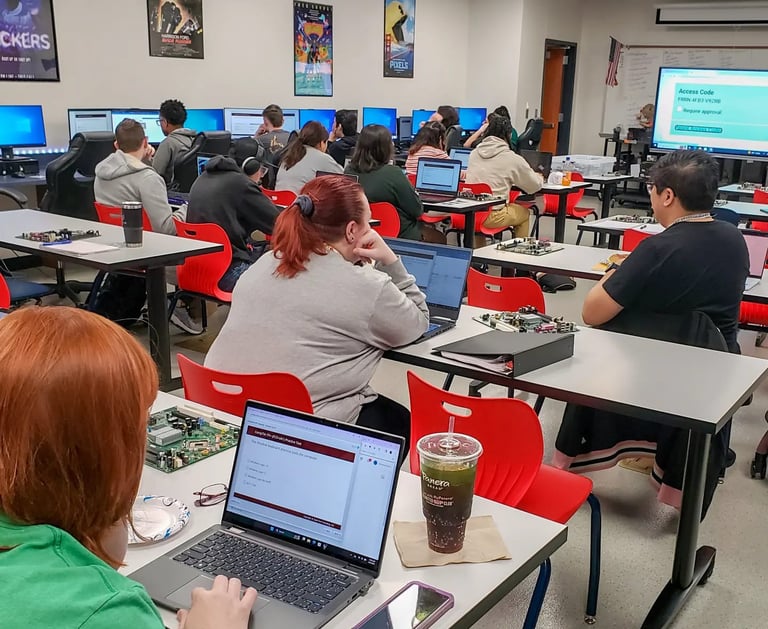
At the heart of StackFord is a simple belief: students learn best when instruction connects to real understanding, not just memorization. That idea shapes everything in the curriculum.
Scott’s approach to instructional design reflects the practice he developed over decades in the classroom, where theory had to meet practice every day. He believes:
Learning should be hands-on, relevant, and meaningful.
Students retain more when they can see how concepts apply in real settings, work through problems, and build confidence step by step.
Teachers should be supported, not overwhelmed.
Too often curriculum feels like extra work to manage. StackFord is structured so that lesson planning, pacing, and classroom delivery feel intuitive. Every module includes clear guidance, teaching aids, and practical tools that save time and help teachers lead with confidence.
Certification should be an outcome of understanding, not a target in isolation.
StackFord aligns with CompTIA objectives, but alignment is purposeful. Each lesson, lab, and activity is designed to deepen student comprehension, not just cover the test outline. The goal is mastery that leads to career readiness.
Flexibility matters.
Today’s classrooms vary by delivery model — in person, blended, or online. StackFord is built to adapt. Whether teachers are using Moodle in a lab or guiding students through activities in the classroom, the curriculum supports different learning environments without losing instructional integrity.
In short, StackFord’s instructional philosophy is grounded in the way teachers actually teach and the way students actually learn. It is practical, responsive, and focused on outcomes that matter for schools, teachers, and students.


Philosophy of Education and Instructional Design
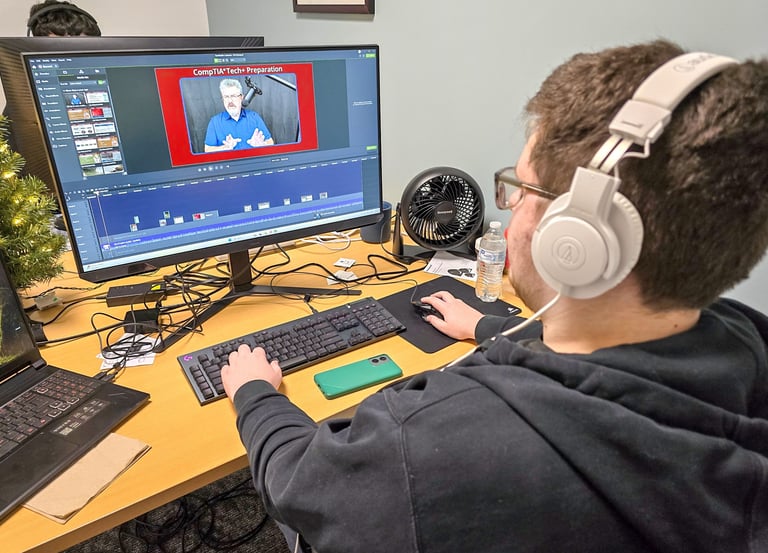
Credentials and Accomplishments
Scott Ford’s work in IT education spans more than 25 years, with experience across classrooms, colleges, professional learning, and government training environments. His credentials reflect a lifelong commitment to helping learners and educators succeed.
Professional Experience
Scott has taught in high school and college settings, designed curriculum for diverse audiences, and led training initiatives in both public and private sectors. His background includes:
Years of high school and post-secondary classroom teaching
Instructional design and curriculum development for IT programs
Delivery of technical training for educators, students, and professionals
Author and Curriculum Designer
Scott is the author of recognized IT certification study guides that support learners and instructors alike:
These books are used by educators and students as trusted resources in preparation for certification success.
Industry and Education Credentials
Scott holds a Master of Education in Educational Technology from Texas A&M, bringing formal pedagogical expertise to his curriculum design work. He also maintains an extensive collection of industry certifications that reinforce his deep understanding of core IT concepts and tools students need to succeed, including:
CompTIA: ITF+, A+, Network+, Security+, Tech+, CSIS, CIOS
Microsoft: Microsoft Office Specialist (Word, PowerPoint, Excel), Microsoft Technology Associate (MTA), Microsoft Certified Professional (MCP), Microsoft Certified Desktop Support Technician (MCDST)
Adobe: Adobe Captivate Specialist
These certifications reflect not only Scott’s deep understanding of core IT concepts but also his ongoing commitment to staying current with the technologies and tools students encounter in the field. Combined with real-world teaching experience, they help ensure that StackFord’s curriculum is relevant, practical, and aligned to industry expectations.
Partnerships and Training Engagements
Scott’s expertise has been sought in a variety of instructional settings — from educator workshops to federal training programs. His practical experience collaborating with schools and organizations adds depth to the StackFord curriculum.
Proven Student Outcomes
In classroom implementations of StackFord curriculum, students consistently demonstrate strong achievement and confidence. For example:
High student success rates on certification-aligned assessments
Increased classroom engagement through hands-on learning activities
These results reflect the effectiveness of curriculum rooted in classroom practice and instructional design experience.