Invited guest speaker on AI for WeTeach_CS later this year
AI is not replacing teachers. But teachers who know how to use it are going to have an edge. Here’s my take on what actually matters right now in AI and education.
EDTECH / EDUCATIONAL TECHNOLOGYPROFESSIONAL DEVELOPMENTAI IN EDUCATION
Scott Ford, M.Ed.
3/25/20262 min read
Invited guest speaker on AI for WeTeach_CS later this year
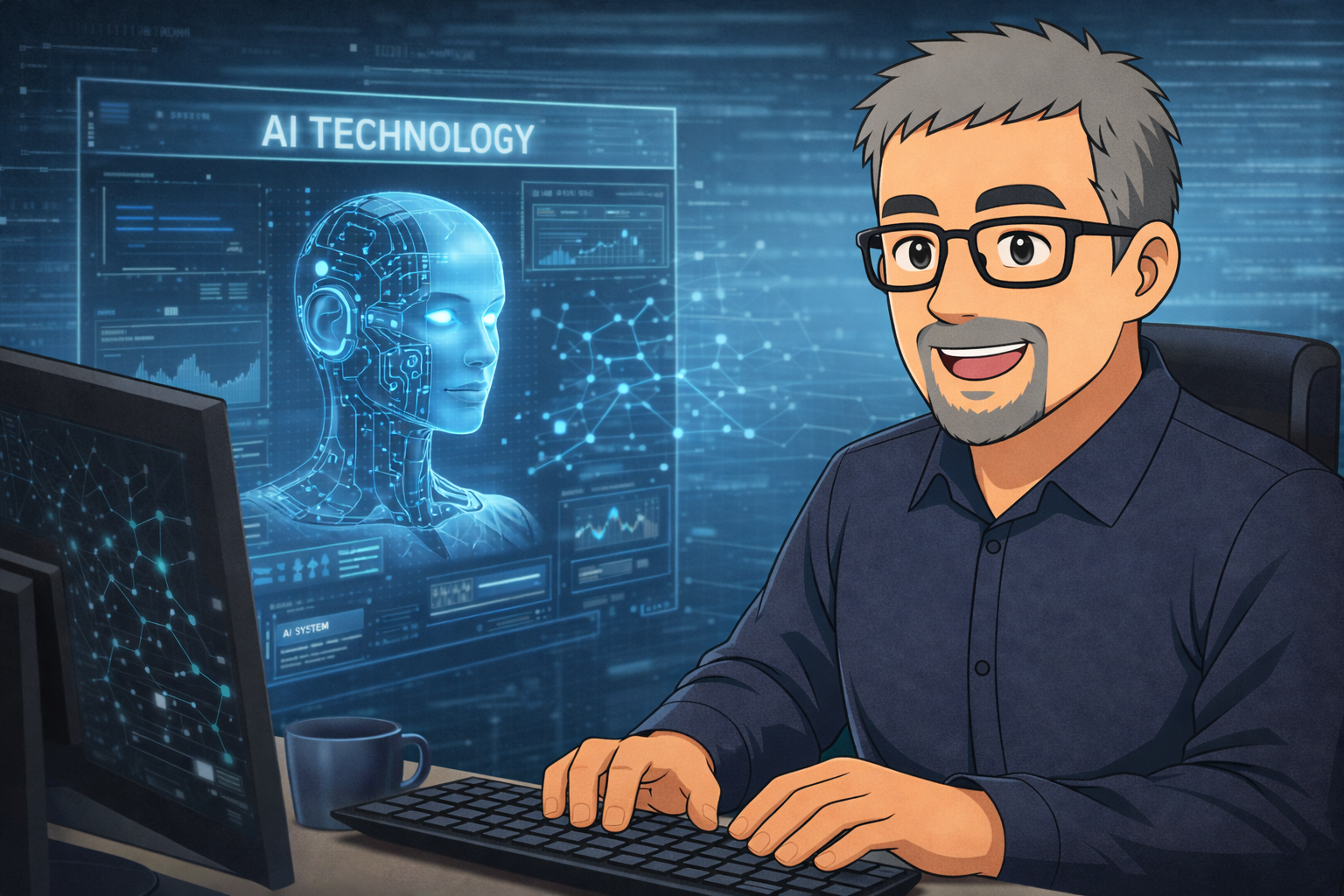
I was recently invited to serve as a multi-day guest speaker for WeTeach_CS later this year, focused on AI in education. We are still narrowing down the exact angle, but it is a conversation I think about constantly, so I am glad to be part of it.
AI in education is one of those topics that tends to bring out strong reactions. Some people are convinced it is the future of everything. Others talk about it like it is the beginning of the end. As usual, I think the truth is a lot more practical than either side wants to admit.
Here’s, as the kids say, my hot take: AI is not going to replace teachers. But teachers who know how to use AI are going to have a clear edge over those who do not. That gap is only going to widen.
That is the part I care about.
I am not especially interested in arguing over whether AI belongs in education. That ship has sailed. It is already here. Students are using it. Teachers are using it. Schools are trying to figure out what to do with it. The real question now is not whether it should exist in the educational space. The real question is what educators are going to do with it.
And that is where the conversation gets interesting.
The part I want to focus on is how teachers can actually use AI in ways that save time, make their work easier, and improve instruction in real, practical ways. Not in theory. Not in a flashy demo. Not in some overproduced keynote where everything works perfectly and nobody has thirty-two students in the room and a copier jam waiting for them back in the hallway.
I am talking about real classrooms with real students and real constraints.
How can AI help a teacher brainstorm better lesson ideas? How can it help create review materials more quickly? How can it support differentiation without adding another three hours to someone’s planning time? How can it help teachers organize ideas, clean up writing, build rubrics, generate examples, or create practice opportunities for students? Those are the kinds of questions worth asking.
Because if AI is going to matter in education, that is where it will matter.
Not hype. Not fear. Just useful tools that work in real classrooms with real students.
That is the conversation I am interested in having, and honestly, it is one I think we need more of. There is too much noise around AI right now. Too much grandstanding. Too much panic. Too much pretending that every new tool is either magical or dangerous beyond reason.
Most of the time, it is neither.
Most of the time, it is just a tool. A powerful one, yes. A disruptive one, absolutely. But still a tool. And like every other tool teachers have ever been handed, its value depends on how well it is understood and how wisely it is used.
So yes, I am looking forward to this one.
I think it is going to be a good conversation. More importantly, I think it is one worth having.